Monday, 24 December 2012
Our Thriller TS, editing and text
Instead of using text from a computer, my group and I have decided to have written text on a whiteboard which I will film at home. I have taken into account the gothic, creepy type text and applied it to my own handwriting, which has hopefully come across. I have experimented with light and how the text will appear. I have tried panning the light across the text, so it starts in complete darkness and the light pans across to reveal the text, and I have tries just filming it appearing instantly. I will show the two shots to my group ad we will decide which one is better.

Wednesday, 12 December 2012
Our Thriller TS
In my group, we didn't create a storyboard as our title sequnce doesn't really show our narrative, even though we do have one. Instead, we created a storyboard which shows our inspirations for camera shots and angles, and lighting:

Our storyboard shows the films we got inspiration from and also just some shots we found interesting and maybe want to try filming ourselves to put into our thriller title sequence.
For our thriller, we are now thinking about editing. For example, we have decided to have each shot fade in and out and have them all black and white. We want our text to be red, to create a striking contrast between the background and the text. We got our inspiration from trailers off Youtube from films like Sinister and The Devil Inside etc...
Here are some screen shots of what sort of font we want to create for our text:


 This screen shot shows the letters appearing, we liked this idea.

The gothic type font is the font my group have decided to go for as it is creepy and gets the audience's attention.

Our storyboard shows the films we got inspiration from and also just some shots we found interesting and maybe want to try filming ourselves to put into our thriller title sequence.
Editing
For our thriller, we are now thinking about editing. For example, we have decided to have each shot fade in and out and have them all black and white. We want our text to be red, to create a striking contrast between the background and the text. We got our inspiration from trailers off Youtube from films like Sinister and The Devil Inside etc...
Here are some screen shots of what sort of font we want to create for our text:


The gothic type font is the font my group have decided to go for as it is creepy and gets the audience's attention.
Tuesday, 13 November 2012
Test shots
In our groups, we have started to film our thriller opening and title sequences. My group are starting to experiment with lighting in different shots. We have focused on creating silhouettes and lots of shadows to convey tension and suspicion for the audience. Low-key lighting is going to be used and we are going to experiment with different camera shots and angles.
Our Thriller Title Sequence
Ideas and Inspiration
For our thriller title sequence, my group and I have decided to do a psychological thriller. We will include lots of shadows and silhouettes to create the tense atmosphere that a thriller creates. The camera shots will we include are CUs, MCUs and some high or low angle shots. Our inspiration comes from films such as:- Paranormal Activity
- Insidious
- Sinister
- The Woman in Black

 These films include lots of shadows and silhouetttes and he music used is very atmospheric and tense, creating that edge-of-your-seat feeling. We would like to create that in our thriller title sequence by using some of the techniques used in these films.
Music
The music we would like to use isn't really music but a soundtrack of a low droning or maybe using silence to make it tense as silence can be very effective. We don't want our music to be over-powering as it would distract from what is happening on the screen.
Editing
We have decided to use slow pace editing to give the audience time to really look at the images on screen. It will be images of shadows and silhouettes because we want to make the audience feel as if there is someone/something always watching you.
Lighting
In our production, we are going to use low-key lighting, as it is common in a thriller as it creates lots of tension and suspense. The low-key lighting will create lots of shadows and silhouettes which is what we want in our thriller.Tuesday, 6 November 2012
Creating tension in a Thriller
Cutting:
Cutting scenes can be very important as it can be used to create suspense and tension in a thriller film. Such as when a cut is done between characters to see what each of the characters can see. This technique is used in films such as the 1920's film Nosferatu:


This editing shows that you don't have to film everything and that cutting can create tension.
Music is a very important part in creating tension and suspense in thrillers. The use of instruments such as screeching violins and/or a low droning sound creates this suspense. In Nosferatu, an organ was used, which in the early days of film, was used a lot in thrillers.
Camera sizes such as Close-up/Medium Close-up are used often and sometimes, Extreme Close-up is used. CU/MCU shots shows facial expressions and emotions which is essential in a thriller as it shows how the audience should feel at a particular moment in the film.
The Silence of the Lambs (1991):
The Silence of the Lambs is a very good example of the different techniques used in a thriller:- Heavy breathing-makes the audience feel scared and feels as if they are actually there.
- POV shot also makes the audience feel as if they are there.
- 'Peaks and Valleys' are used in the film, which is where the music and scene builds up to a peak(crucial point in the film), such as when she opens the door to find the killer but he isn't there, which is a valley (low point in the film).
- Lots of CUs used to show emotion
- There is a scene where the camera is at the POV of the killer and it is dark, the killer is wearing night-vision goggles. This makes the audience feel on the edge-of-the-seat feeling. The thought of not being able to see in the dark is scary but the thought of someone who can see you and you can't see them is even scarier.
- No long shots were used in the extract as they are used more for setting the scene. But LS can be effective if used right. Such as in Nosferatu and for silhouettes.

Thursday, 18 October 2012
Thriller Conventions and Textual analysis of title sequences and openings
Thriller conventions include;
- Blood
- A killer
- Tension
- Dim/dark, low-key lighting
- Scary atmosphere
- Jumpy
- Medium close-up, extreme close up and close up shots
- Scary, atmospheric music
- Normally set at night or in stormy weather, lightning and thunder
Films:

Leon
- Shaky camera work, hand-held:this creates realism, documentary
- CU shots, this captures the characters emotions/facial expressions
- Shot-reverse-shot, used in a conversation
- ECU shots-used to show reflection off glasses, so you can see other character, also creates tension
- High angle shots
- 180 degree rule, smoother camera work, defying the 180 degree rule would make the editing look jumpy
- Low-key lighting, lots of shadows-used a lot in thrillers to create suspense and tension
- Fade to black, fade out and in
- VLS: establishing shot, showing where film is set.
- Set in a backstreet, grimy. Feel of film.
- Reflection in glasses, showing the other person through reflection so audience can see them as well as the person actually on camera
- Music creates tense atmosphere, low droning sound, creating tension

The Machinist
Tech. Codes:- Non-focused camera work, makes the audience concentrate on what is in focus
- MCU shots, shows facial expression as well as posture or body language
- Low angle and high angle shots
- CU shots, shows emotion
- Music creating tension, use of violins contrasting-loud to quiet etc...
- Waves crashing in background
- Camera work looks as if the audience are spying on the character, voyuerism
- Camera focuses on the window pane, not the character, this creates Sensory Deprivation, in this case, sight
- A sound bridge is used to create a smooth transition from one scene to the next
- When the film first starts, there is only sound, no picture, which makes the audience think 'what is happening?'
- Over-shoulder shot, is something going to happen behind him?
- Tracking
- Low-key lighting and set at night
- Dark shadows on his face, up-lighting, distortion
- Bleach:get rid of blood, did he kill the man who saw him dump the body? Insight into character and what he does
- Torch on his table
- His room is dirty and has minimal stuff, suggests he may be a killer?
- Character smoking and quite thin-shows stress
- Cuts and bruises on his face, not clean but looks like an ordinary man
- Silver text, font is mechanic
- Slow paced opening, about 6-10 shots a minute, not many-makes audience pay attention to what's happening and all the little details
- Titles quite subtle
- Eye-line match:watching the character's face, then cutting to what he sees
Monday, 15 October 2012
The Dolly Zoom/Hitchcock Shot
The 'Dolly Zoom', or Hitchcock Shot, is an unsettling in-camera effect that appears to undermine normal visual perspective. The effect is achieved by using the setting of a zoom lens to adjust the angle of view (often referred to as field of view or FOV) while the camera dollies (or moves) towards or away from the subject in such a way as to keep the subject the same size in the frame throughout. In its classic form, the camera angle is pulled away from a subject while the lens zooms in, or vice-versa. Therefore, during the zoom, there is a continuous perspective distortion, the most directly noticeable feature being that the background appears to change size relative to the subject.
For example:
The 'Dolly Zoom' has many different names:
For example:
The 'Dolly Zoom' has many different names:
- The "Hitchcock zoom" or the "Vertigo effect"
- "Hitchcock shot" or "Vertigo shot"
- Triple Reverse Zoom
- Reverse Tracking Shot
- Back Zoom Travelling
- Retrograde zoom
- "Smash Zoom" or "Smash Shot"
- Vertigo zoom
- A "Jaws shot"
- A "zido"
- A "zolly"
- Telescoping
- Trombone shot
- Push/pull
- The Trombone Effect
- A Stretch shot
- Reverse Pull
- More technically as forward zoom / reverse tracking or zoom in / dolly out
- Trans-trav (in Romanian), from trans-focal length operation and travelling movement
- Contra-zoom
Textual Analysis of Shawshank Redemption 1994
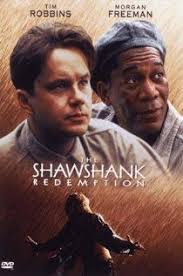 Shawshank Redemption 1994
Tech. Codes
- Old, vintage music during titles, then sound bridges into opening scenes. This creates smooth transition into next scene------this is one of the things I would like to include in my production, as I think it would be a useful thing to have and improve my production
- Crickets in background with opening scene, adding to the music playing on the radio.
- Sound of violins and piano during present day scenes but not in flash backs.Creating tension and shows that the flash back is a separate scene.
- Diegetic sound of judge giving prison sentence , not on screen but part of the scene. Done this so the camera is on the man getting the sentence so audience can see facial expression
- Non-diegetic sound: Voice over
- CU and MCU shots to show emotion of the character-----This shots will be included in my production as they are important to a thriller
- Low angle and high angle shots, low angle shots shows someone as powerful and high angle shots shows someone as not powerful
- Medium shot used, this shows the audience where the scene is set and also the body language of a character
- Camera tracking in on character to show emotion, also feels intimidating, when man steps towards other character-------Camera tracking is an element that I could include as it could creates suspense
- Going from non-diegetic to diegetic sound
- Music on flash back, showing that it is a flash back
- Piano chords and violins soundtrack in present day to create tension, adding to atmosphere---------Sound to create an atmosphere will be needed, and violins or piano or orchestral strings are good to use in a thriller
- Orchestral strings subtly playing in background
- Low-pitched rumble on scene where the main character gets accused of crime
- Camera tracking on witnesses of main characters trial to show their facial expressions and emotion, building tension
Lighting
- Low-key lighting, shadows, creating tension for the audience----Low-key lighting will be used in my production as it is common in a thriller
- Shadows of trees projected on a character, only glimpses of character, feeling of suspense
- Present day is lighter than flash backs, natural lighting for present day, low-key lighting for flash backs, set at night, creating mystery. Makes you think what is going on?
- Can't see much in the dark, makes audience feels confined
- Up-lighting used in flash backs, distorting his face, making him look creepy and suspicious and creating shadows on his face
- Grey and colourless
- Light from outside
- Turns light off in car, creating a silhouette-----I would like to include silhouettes and lots of shadows in my production to make the audience feel on edge and create tension
Mise en scene
- Props--alcohol, gun, gives insight into character. Drinking shows he is unhappy?----Props are very important in a production, so I will include appropriate props in my production to give the audience an insight into what it is about
- Smartly dresses in court room, formal
- Posture of lawyer, head to side, hands behind back, showing he doesn't believe the characters innocence, also authoritative
- 50's feel to film, old music playing. Gun old-fashioned
- Lady in flash back wearing red. Could signify passion or danger
- Leaning into camera, shows authority
Editing
- Vintage text, 50's feel
- Black background and white text
- Text, font = art deco. Could signify prison bars, looks like prison bars
- Slow paced shots, makes audience focus on what's happening and pay attention to all the little details. Slow paced shots also pull you in, makes you want to know what's going on-----I have decided that in my production I will use slow paced as it is more suited to my narrative
Thursday, 11 October 2012
Rule of Thirds
The Rule of Thirds is when you shoot using a grid and the subject is on either line at the side, for example:

If there is a close up shot, then the top line must be in line with the person's eyeline:

A bad example of the rule of thirds is something like this:

Textual Analysis of the opening and title sequence of Seven
Film: Seven
Tech. Codes:
- Medium close up shots-shows facial expressions as well as some of the characters body language
- Low angle shots-Shows power and dominance
- Contrasting sound: Outside in rain, quiet room, gets louder with metronome, creating tension
- Sirens in distance, diegetic sound
- Background noises, such as thunder to set the scene and an argument which gets louder
Lighting:
- Dark, low-key lighting. Lots of shadows
- Bright background through windows. Dim look
- Torches used in dark room, creating shadows

Mise en Scene:
- Smart clothing, suits, shows that they are detectives
- Props of Morgan Freeman's table-knife, chess board, intelligent, detective
- Pulls fluff off jumper, OCD? Insight into charcter
- Metronome ticking in his Freeman's bedroom, building tension
Editing:
- Duration of shots is quite long in opening, contrasts with title sequence-short shots and fast paced.
- Slow pace, meaningful, makes you concentrate on what is happening in opening
- Tracking
- Title sequenc3e has a disorientated look, unsettling
- Black and white contrasting with red, threat
- Binary opposition
- Harsh font, scratched in, hand-written
- Flickers, transition
- Dirty look, off-white paper. Dirty nails and fingers. Killer? Gritty and grim

Tuesday, 9 October 2012
Lighting
Lighting is important when it comes to filming. There are two types of lighting:
Soft Light and Hard Light
Soft Light includes very limited shadows and a very smooth and silky look. Used often in romantic and glamour films. Can also be referred to as High-key lighting
Hard Light creates heavy, dark shadows and is often used in thriller and horror films to create tension. Can also be referred to as Low-key lighting.
Light Direction:
Three point lighting is often used in productions. This includes a Key light, a Fill light and a Back light. The suject is in the middle.
For example:

Chiaroscuro is used in cinematography to indicate extreme low-key lighting to create distinct areas of light and darkness in films, especially in black and white films. The literal translation is light-dark. Classic examples are The Cabinet of Dr. Caligari(1920), Nosferatu(1922), The Hunchback of Notre Dame (1939), The Devil and Daniel Webster (1941) and the black and white scenes in Andrei Tarkovsky's Stalker (1979).
Soft Light and Hard Light
Soft Light includes very limited shadows and a very smooth and silky look. Used often in romantic and glamour films. Can also be referred to as High-key lighting
Hard Light creates heavy, dark shadows and is often used in thriller and horror films to create tension. Can also be referred to as Low-key lighting.
Light Direction:
Three point lighting is often used in productions. This includes a Key light, a Fill light and a Back light. The suject is in the middle.
For example:

Chiaroscuro is used in cinematography to indicate extreme low-key lighting to create distinct areas of light and darkness in films, especially in black and white films. The literal translation is light-dark. Classic examples are The Cabinet of Dr. Caligari(1920), Nosferatu(1922), The Hunchback of Notre Dame (1939), The Devil and Daniel Webster (1941) and the black and white scenes in Andrei Tarkovsky's Stalker (1979).
Saturday, 6 October 2012
Three Textual Analysis of Thriller Title Sequences
Three Textual Analysis of Thriller Title Sequences:
The Girl with the Dragon Tattoo
Tech. Codes
|
Lighting
|
Mise en Scene
|
Editing
|
Close-up shots
|
Dark, low-key lighting
|
Well dressed men
|
Fast pace, short shots
|
High angle shots
|
Contrasting: Ball of fire against black background
|
Phone, cluttered table, magnifying glass
|
Font: Gothic, sharp. Appears instantly, the letters like ‘R’ and ‘N’ grow tails.
|
Soft music for opening
|
Black shapes, no colour except black, apart from fire in certain shots
|
Two men having phone conversation
|
Flashing images at start of title sequence
|
Panning camera movement
|
Light coming in from window, dimly lit lamp
|
White, clean house, plain, minimal objects
|
Black, tar like substance, splashing like water
|
Mysterious opening: phone call
|
Shutter Island
Tech. Codes
|
Lighting
|
Mise en Scene
|
Editing
|
Medium shots
|
Outside on a boat, sun in sky lighting. Dull
|
Suits, smart clothing
|
Short shots
|
Close-up shots, match-on-action
|
Dull colours, contrast between bright colours in flash backs. Bright colours show happy tone and dull show a sad tone
|
Men in uniform, security shows danger
|
Text appears instantly, font is bold, thick
|
Close-up shots, match-on-action
|
Dull colours, contrast between bright colours in flash backs. Bright colours show happy tone and dull show a sad tone
|
Men in uniform, security shows danger
|
Text appears instantly, font is bold, thick
|
Deep brass music, short pieces, tension
|
Storm approaching. Clouds. Typical thriller convention
|
Black background against silver text
| |
Music swells when approaching building, then suddenly stops, when officer starts talking
|
Dull building contrast against greenery
|
Insidious
Tech. Codes
|
Lighting
|
Mise en Scene
|
Editing
|
Music, screeching violins
|
Low-key lighting, dark
|
Scary lady wearing gothic clothing, garb, black clothing
|
Red text, font is bold with smoky shadow effect, ghostly faded upwards, text faded out to left and right
|
Music swells when title appears suddenly
|
Shadows of people in windows
|
Family wearing PJ’s, just woken up. Innocent, normal family
|
Black, dark background, black and white, light from lamp contrasting against black BG
|
No music when credits appear, tension
|
Flashing lights during title
|
Casual wear, at home
|
Red title, gothic font, bold, embossed, 3D effect, appears instantly, shock value
|
High angle shots. Shots zoom in
|
Dark background
|
Black and white effect of house, contrast with red text of credits
| |
Close up shots
|
Candle and moonlight to show woman’s old scary face and nothing else
|
Lens flickering
| |
Shaky camera work, hand-held effect
|
Shadows, light coming in from windows
|
Pictures fade out, becomes distorted
|
Things I could include in my production is the use of red text and a gothic font for the credits in the title sequence. Also the use of shadows and low-key lighting,and the use of a black and white background. The music I could use could be quite ominous, like violins or use of quiet, mysterious music. For camera shots, I could use close-ups, extreme close ups and also high and low angle shots.
Subscribe to:
Posts (Atom)